
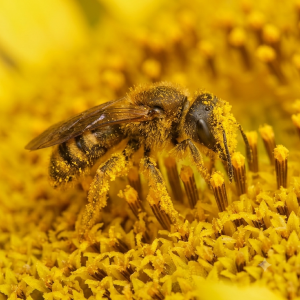
The Role of Bees and Pollen in Ecosystems and Food Production
Bees and pollen play a vital role in maintaining healthy ecosystems and supporting food production around the world. While bees are often associated with honey production, their most significant contribution is pollination. Pollination is the process through which pollen is transferred between flowers, enabling plants to produce seeds and fruits. Pollen, a fine powder produced by the male parts of flowering plants, contains the genetic material necessary for fertilization. Through their interaction with pollen, bees help sustain plant life, promote biodiversity, and support agricultural systems that provide food for millions of people.
As bees search for nectar and pollen to feed themselves and their colonies, tiny pollen grains attach to their bodies. When bees move from one flower to another, some of this pollen is deposited onto the flower’s female reproductive structures. This transfer allows fertilization to occur, leading to the development of seeds and fruits. Because many flowering plants rely heavily on insect pollination, bees have become one of the most important pollinators in both natural and agricultural environments. Without their assistance, many plant species would struggle to produce offspring, resulting in reduced plant diversity and weaker ecosystems.
The relationship between bees and flowering plants is mutually beneficial. Bees obtain essential nutrients from nectar and pollen, while plants benefit from the efficient movement of pollen between flowers. Over millions of years, these two groups have evolved together, creating a highly specialized partnership. Flowers attract bees through bright colors, distinctive scents, and nectar rewards, while bees ensure the continuation of plant life by carrying pollen from one bloom to another. This evolutionary relationship demonstrates how different organisms can depend on each other for survival and success.
The impact of bee pollination extends far beyond individual plants. Flowering plants form the foundation of many ecosystems by providing food, shelter, and nesting sites for a wide variety of organisms, including birds, insects, and mammals. By helping these plants thrive, bees contribute to the stability of food webs and the overall health of natural environments. Healthy ecosystems support biodiversity, improve soil quality, assist in water regulation, and help maintain ecological balance. As a result, the work performed by bees benefits countless species, directly and indirectly.
In addition to their environmental importance, bees are essential to agriculture and global food production. Many crops depend on pollination to produce abundant and high-quality harvests. Fruits, vegetables, nuts, and seeds such as apples, strawberries, blueberries, almonds, cucumbers, and pumpkins all benefit from bee activity. Pollination often increases both the quantity and quality of agricultural products, leading to larger fruits, more uniform crops, and improved yields. Because of this contribution, bees play a crucial role in supporting food security and generating economic value for farmers and agricultural industries worldwide.
Despite their importance, bee populations face numerous challenges. Habitat loss caused by urban development and intensive farming reduces the availability of flowering plants that bees depend on for food. The widespread use of certain pesticides can harm bees directly or interfere with their ability to navigate and forage effectively. Climate change is also affecting flowering seasons and weather patterns, making it more difficult for bees to find reliable food sources. In addition, diseases and parasites have contributed to declining bee populations in many regions. These threats can reduce pollination services, creating negative consequences for ecosystems and agricultural production.
Protecting bees requires both individual and collective action. People can support pollinators by planting native flowers, reducing pesticide use, and creating bee-friendly gardens. Communities and governments can also promote conservation programs that preserve natural habitats and encourage sustainable farming practices. These efforts help provide bees with the resources they need to survive and continue their essential work.
In conclusion, bees and pollen are fundamental components of life on Earth. Their interaction supports plant growth, maintains biodiversity, strengthens ecosystems, and enhances agricultural productivity. The benefits provided by bees extend from natural habitats to farms and ultimately to human societies. By taking steps to protect bee populations and their habitats, we can help ensure a healthier environment and a more sustainable future for generations to come.